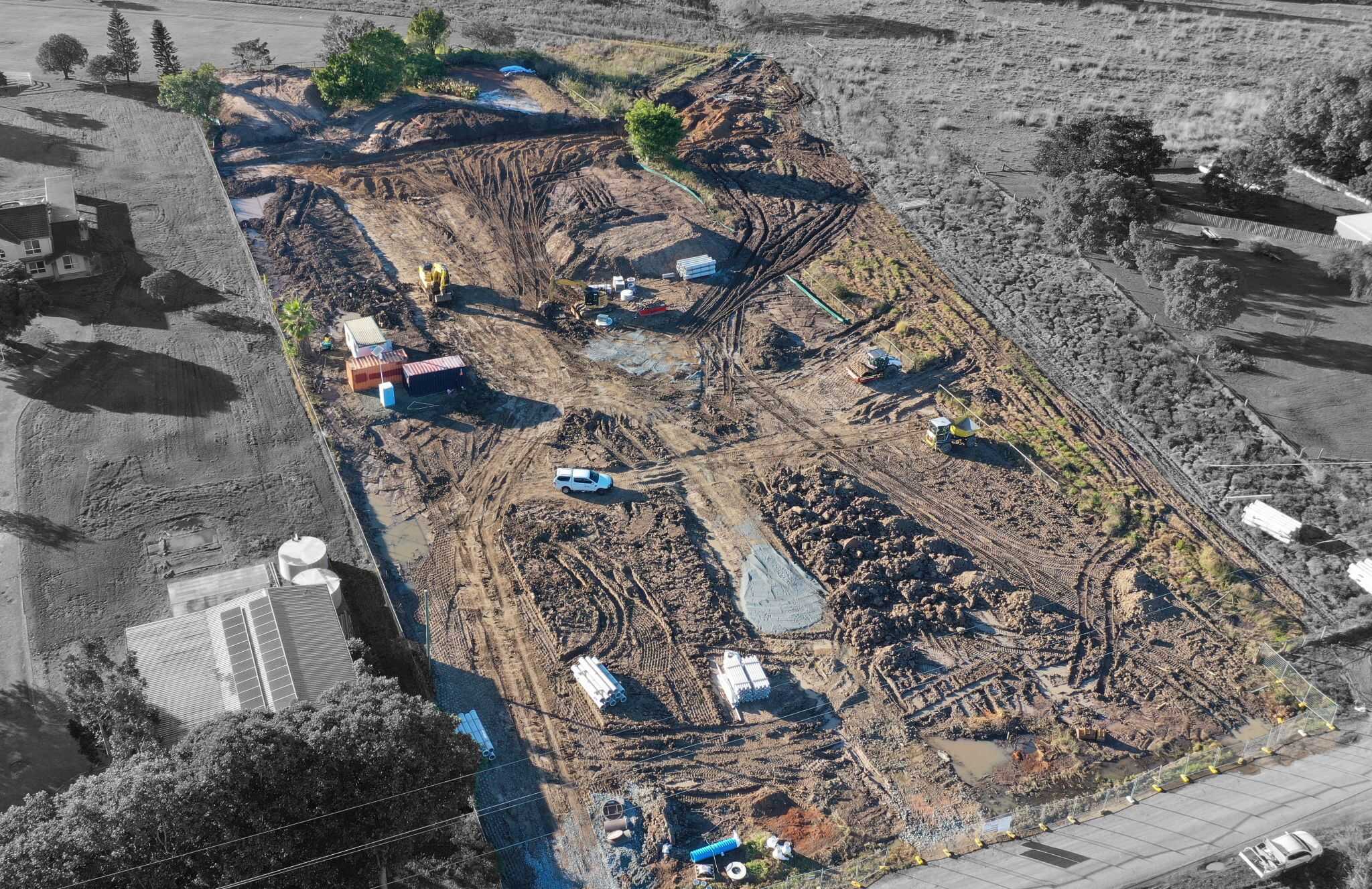
Eligibility for Development Loans in QLD: What Property Developers Need Before Applying
Eligibility for Development Loans in QLD
Eligibility for a development loan in QLD depends on whether the lender is comfortable with the security property, project feasibility, borrower equity, construction plan, builder experience and exit strategy.
Unlike a standard home loan, income and credit score are not the main criteria. Lenders assess the project first: can it be completed, and how will the loan be repaid?
Assured Management assesses development finance based on the project, security, feasibility and exit strategy. Facilities from $1M–25M. Call (07) 5578 6177 or enquire online.
Most development loan applications that fail do so for one of four reasons: insufficient equity, unrealistic feasibility, no clear exit strategy or incomplete documentation. None of those has anything to do with your salary or credit score. Understanding what lenders actually assess before you apply is the difference between a funded project and a wasted six months.
Assured Management is a boutique non-bank lender providing first-mortgage construction and development loans across SE QLD and Northern NSW. Loans from $1M–25M, assessed directly by the team approving the finance.
Key Takeaways
- Development loan eligibility in QLD is assessed on the project first, not mainly on salary, income serviceability or credit score.
- Lenders focus on whether the project can be completed, whether the numbers are realistic, and how the loan will be repaid.
- The most important approval factors are security property, project feasibility, borrower equity and a clear exit strategy.
- Development approval, builder experience, construction costings and supporting documentation all strengthen the application.
- Most failed applications come down to insufficient equity, unrealistic feasibility, unclear exit strategy or incomplete documents.
- First-time developers can still qualify, but they usually need stronger supporting evidence, such as an experienced builder, DA approval, realistic feasibility and meaningful equity.
What Does Development Loan Eligibility Mean?
Eligibility for a development loan in QLD depends on whether the borrower and the project meet the lender’s risk requirements. There is no universal checklist, and different lenders weigh criteria differently.
For QLD projects, location, planning status and market demand all influence assessment. A well-located project with strong feasibility, sufficient equity and a clear exit is significantly more likely to secure finance.
Development loan eligibility in QLD: a lender needs to answer yes to three questions. Can this project be built for the estimated cost? Can it be sold or refinanced at the projected value? Does the borrower have the equity and capability to see it through? If yes to all three, most projects will find finance.
Development Loan Eligibility Is Project-Led, Not Income-Led
For a standard home loan, the lender asks: can this person service repayments from their income over 25 years? For a development loan, the question is different: can this project be built, sold or refinanced within the loan term, and does the borrower have the equity and capability to see it through?
- Income is secondary: Development loans are short-term facilities repaid through project exits, not salary payments.
- The project drives approval: Security, feasibility and exit strategy are assessed before the borrower’s personal financial position.
- Exit strategy repays the loan: The repayment source is presales, settlement proceeds or refinance.
- Security underwrites the risk: The developed property, or the land in its current state, is the lender’s primary protection.
Development Loans vs Home Loans: Why Eligibility Is Different
Factor |
Standard Home Loan |
Development Loan |
|
Primary eligibility factor |
Income/serviceability |
Project feasibility and exit strategy |
|
Repayment source |
Monthly income over 25–30 years |
Presales, refinance or settlement |
|
Loan term |
25–30 years |
Typically 12–18 months |
|
Deposit/equity |
% of purchase price |
The gap between the facility and the total development cost |
|
Credit score weight |
High |
One factor among many |
|
Key risk assessed |
Borrower income stability |
Project completion and exit viability |
What Types of Development Projects Can Be Funded in QLD?
Development finance in QLD covers a range of residential and commercial project types. The project type affects how the loan is structured, the required documentation, and how the lender assesses feasibility and exit.
- Land subdivisions and residential estates.
- Townhouse and terrace developments.
- Duplex and dual-occupancy projects.
- Unit blocks and low-rise apartment buildings.
- Mixed-use developments combining residential and ground-floor commercial.
- Commercial and industrial premises.
Non-bank lenders in SE QLD typically fund residential development, including land subdivisions, housing estates, townhouses and unit blocks, with some commercial and industrial projects assessed on their merits.
What Are the Development Loan Eligibility Requirements in QLD?
Development lenders in Queensland assess the following criteria, weighted in the order below.
Tier |
Criterion |
What lenders are assessing |
|
Tier 1 |
Security property |
The site must be suitable for security; location, title and development potential are assessed first. |
|
Tier 1 |
Project feasibility |
Does the project make financial sense? TDC vs GRV and the development margin are central. |
|
Tier 1 |
Exit strategy |
How the loan is repaid: presales, settlement proceeds or refinance. |
|
Tier 1 |
Borrower equity |
Your contribution relative to TDC and GRV, the gap that the lender will not fund. |
|
Tier 2 |
Development approvals |
DA, BA or a credible approval pathway; post-DA projects are significantly easier to fund. |
|
Tier 2 |
Builder experience |
Track record, licence, insurance and capacity to deliver the specific project type. |
|
Tier 2 |
Construction costings |
Fixed-price contract or QS report; the lender needs confidence in the build cost. |
|
Tier 3 |
Developer track record |
History of completing similar projects; compensated by stronger deal fundamentals if absent. |
|
Tier 3 |
Credit history |
One factor in the broader picture; transparency matters more than a perfect score. |
|
Tier 3 |
Contingency |
10–15% of hard construction cost; shows planning for variance rather than best-case assumptions. |
|
Tier 3 |
Supporting documents |
Complete financials, entity structure and borrower background; gaps slow or end assessment. |
Tier 1: Deal Fundamentals
These four criteria determine whether a deal is fundable at all. A project that fails on any of these is unlikely to proceed regardless of how strong the other factors are. Security, feasibility, exit strategy and borrower equity are assessed first and carry the most weight.
Tier 2: Execution Capability
Execution capability shows whether the borrower and delivery team can actually complete the project. This includes approvals, builder experience and construction costings.
Tier 3: Risk Adjustments
Risk adjustments influence how a lender views the application overall. These factors may not automatically make or break a deal, but weak documentation, unrealistic contingencies or undisclosed credit history can slow or end assessment.
Development Loan Eligibility Checklist QLD
- Security property is suitable for the proposed development.
- Feasibility study prepared showing TDC, GRV and development margin.
- Borrower equity confirmed and sufficient relative to LVR/GRV.
- Development approval (DA) status confirmed or approval pathway identified.
- Construction costings prepared via fixed-price contract or QS report.
- Builder selected with demonstrated track record and current licence.
- Developer track record documented, or compensating factors identified.
- Market demand evidence and comparable sales available.
- Contingency of 10–15% of hard construction cost included.
- Exit strategy clearly defined, such as presales, refinance or settlement proceeds.
- LVR/GRV within acceptable limits for the target lender.
- Financial documents assembled, including assets and liabilities, financials and entity structure.
Do You Need Development Approval Before Applying for Finance in QLD?
Development approval (DA) is one of the most common questions developers ask when approaching a lender. Having DA in place significantly strengthens an application, but it is not always required at first contact.
DA approved: The strongest position. The lender can assess the project against approved plans, confirmed costings and a clear construction pathway. Most lenders prefer post-DA projects for construction finance.
DA pending or in progress: Some lenders will consider finance where DA is pending, particularly for acquisition or bridging facilities. The lender assesses the likelihood of approval, the site’s planning history and whether the project makes sense if approval is delayed or modified.
Pre-DA acquisition finance: Assessed differently from construction finance. The focus is primarily on current site value and borrower equity rather than development potential. These facilities are shorter in terms and typically at a lower LVR than post-DA construction loans.
For construction finance, most lenders work from approved plans and fixed-price contracts. Developers without a DA in place are encouraged to speak directly with their lender to understand what may be possible at the pre-approval stage.
How Much Deposit Do I Need for Development Finance?
Development finance is not assessed like a standard home loan. In this context, “borrower equity” is a more accurate term than “deposit”.
What Counts as Borrower Equity?
- Cash contributed to the project.
- Land equity, if you own the site and its value above any existing debt contributes.
- Other property security offered to the lender.
- Existing project equity in multi-stage developments.
How Lenders Calculate What They Will Fund
Non-bank development lenders in QLD typically lend to 65% of both the As Is valuation and the Gross Realisable Value (GRV). This means the loan cannot exceed 65% of the site’s current value, and also cannot exceed 65% of the completed development’s projected value.
The GRV basis matters because it limits the loan relative to the finished product’s value, not just its cost. A project with a thin margin between total development cost and GRV will require more borrower equity than one with a stronger margin.
In some cases, GST refund entitlements can be incorporated into the facility structure, reducing the additional equity required on qualifying projects.
Example: A $6M townhouse development with a completed GRV of $9.2M would support a maximum facility of approximately $5.98M at 65% GRV. If total development cost is $7.8M, the developer needs to fund the $1.82M gap from equity, which may come from land equity, cash or a combination of both. A thinner margin between TDC and GRV would increase the equity gap; a stronger margin would reduce it.
Development finance deposit requirements in QLD: the equity required depends on total development cost, GRV, LVR, presale coverage and developer experience. Lenders typically lend to 65% LVR/GRV. The borrower contributes the balance.
How to Qualify for Development Finance in Queensland: Why Applications Fail
Understanding why applications are declined is often more useful than a list of approval criteria. Four issues account for the majority of rejected or delayed applications in QLD.
- Insufficient equity: The developer’s contribution falls short of what the lender requires relative to the total development cost and GRV. This is the most common issue, and it often surprises first-time developers who have not mapped out the full cost structure before approaching a lender.
- Unrealistic feasibility assumptions: End values based on optimistic comparable sales, construction costs without adequate contingency, or a margin too thin to absorb variance. Lenders stress-test these numbers. Applications that only work on best-case assumptions rarely proceed.
- Weak or absent exit strategy: The lender needs to see how the loan will be repaid. Presales are the strongest signal. A vague plan to sell after completion, without comparable evidence or a realistic timeline, is not sufficient.
- Incomplete documentation: Missing builder contracts, no QS report, unapproved plans or gaps in borrower financials all slow or end the process. A complete application at first submission moves faster than a partial one requiring repeated follow-up.
What Documents Do You Need for a Development Loan Application?
Development Loan Documentation Checklist
Project Documents
- Project summary and development overview.
- Site details and title information.
- Planning approvals, such as DA, BA, permits, or evidence of the approval pathway.
- Architectural plans and specifications.
- Fixed-price building contract or detailed builder quote.
- Quantity surveyor (QS) report or cost estimate.
- Feasibility study showing TDC, GRV and development margin.
- Cash flow forecast.
- Sales evidence or independent market appraisal.
- Presale contracts, if available.
- Proposed exit strategy.
Borrower Documents
- Statement of assets and liabilities.
- Personal and/or company financial statements.
- Company, trust or entity structure information.
- Development track record, including prior projects.
- Builder credentials, licence and insurance.
The Development Finance Application Process
- Confirm the project type and funding need: Determine whether you need acquisition finance, construction finance or a combined facility.
- Prepare the feasibility and project documents: Produce a credible feasibility study showing total development cost, GRV, required facility size and projected margin.
- Estimate your equity position: Understand the gap between the lender’s maximum facility and total development cost.
- Approach a lender or broker: Developers can speak directly with the team responsible for assessing and approving finance, which can streamline the initial process.
- Submit documents for initial assessment: The lender reviews security, feasibility, developer profile and exit strategy before indicating whether the project is suitable.
- Receive indicative terms: If the project is suitable, the lender provides indicative terms covering facility size, interest rate, fees, LVR and conditions.
- Due diligence is completed: Formal valuation, QS review and any other required reports are completed. The lender confirms the facility based on the valuation outcome.
- Loan documentation is issued and executed: Settlement occurs, and funds are released per the facility agreement.
- Progress drawings are made during construction: Funds are released in stages as construction milestones are reached and certified.
Different loan types cover different stages. Acquisition finance funds the site purchase. Construction finance funds the build. Bridging finance can cover gaps between stages. Investment finance applies if retaining the completed asset long-term.
Is Salary a Factor in Development Loan Approval?
Salary is not a primary eligibility criterion for a development loan in QLD. Development loans are repaid through presales, settlement proceeds or refinance. Personal income may still be relevant where guarantees are involved.
Does Credit Score Affect Development Loan Eligibility in QLD?
Credit score is not the primary criterion for a development loan in QLD. Credit history is reviewed as one input among many.
A poor credit history is not an automatic disqualification, but it is a factor. Transparency matters: lenders who discover undisclosed issues during due diligence respond worse than those told upfront. Non-bank lenders are generally more flexible than banks. Raise any issues early.
Can First-Time Developers Qualify for Development Finance in QLD?
First-time developers may still be eligible for development finance, depending on the strength of the project and the support structures in place. Lack of track record is not an automatic disqualification, but applications receive more scrutiny and are assessed more heavily on the deal structure itself.
Without a development history, lenders look harder at everything else. A first-time developer may improve their position by:
- Engaging an experienced builder with a strong track record in the relevant project type.
- Having development approval in place before approaching lenders.
- Presenting a well-prepared feasibility with realistic costs and conservative end values.
- Contributing meaningful equity rather than the minimum possible.
- Working with experienced consultants, such as town planners, quantity surveyors and project managers.
- Starting with a smaller, lower-complexity project rather than a large multi-stage development.
How Assessment Differs in Practice
Experienced developer: A developer with two completed townhouse projects, a DA in place, a fixed-price contract and 35% equity relative to TDC is likely to receive indicative terms quickly. The track record reduces scrutiny on execution risk.
First-time developer: The same project without a track record requires more. The lender looks harder at the builder’s credentials, the feasibility margin, the equity position and whether DA is fully in place. A strong deal can still proceed, but the bar on supporting documentation is higher, and the assessment takes longer.
Interest rates and conditions offered to a first-time developer may differ from those offered to an experienced one. The best approach is to present the project thoroughly and be transparent about experience levels.
What Makes a Strong Development Loan Application in QLD?
A strong application is one where the lender can quickly see the project is viable, the numbers are realistic, the team can deliver and the exit is credible. Accurate and complete beats polished and vague.
Application element |
Why it matters to the lender |
|
Credible feasibility study |
Shows whether the project is financially viable before any money is committed. |
|
QS report or fixed-price contract |
Gives the lender confidence that construction cost estimates are reliable. |
|
Clear exit strategy |
Demonstrates how the loan will be repaid; presales are the strongest exit signal. |
|
Developer track record |
Builds confidence in delivery; compensated by strong deal fundamentals if absent. |
|
Development approvals in place |
Reduces approval risk; lenders prefer not to fund pre-DA projects. |
|
Sensible contingency, 10–15% |
Shows the developer has planned for variance rather than assumed the best case. |
|
Market demand evidence |
Sales data, comparable evidence or appraisal supporting end values. |
|
Transparent financials |
A complete picture of the borrower’s position; gaps raise questions. |
How Non-Bank Lenders Assess Development Loan Eligibility in QLD
Non-bank lenders operate outside the credit committee structures that govern bank lending. Assessment happens closer to the project: at Assured Management, the team reviewing the application is often the same team approving it, which means fewer layers between the developer and a decision.
For developers, this means faster initial feedback and the ability to have a direct conversation about project structure before formally applying.
Where non-bank lenders differ from banks is in how they weigh criteria. A project with a non-standard structure may not satisfy a bank’s credit policy. It can still meet a non-bank lender’s commercial assessment if the project fundamentals are strong.
About Assured Management
Developers can speak directly with the loan approval team to discuss what may be suitable for their specific project.
Loan facilities $1M–25M, up to 18 months. SE QLD and Northern NSW. Lending to 65% LVR/GRV.
What it means in a nutshell
Eligibility for a development loan in QLD is assessed on the full project picture. The sections above cover each criterion in detail.
The most common reasons applications fail are insufficient equity, unrealistic feasibility, no clear exit strategy and incomplete documentation. Addressing all four before making contact is the single best preparation.
For a project-specific assessment, contact the Assured Management loans approval team directly on (07) 5578 6177, free call 1800 028 885, or submit an enquiry online.
Frequently Asked Questions:
What are the development loan eligibility requirements in QLD?
Eligibility covers the security property, project feasibility, borrower equity, development approvals, construction plan, builder experience and exit strategy. No single threshold determines approval; lenders assess the full project picture.
How much deposit do I need for development finance?
There is no fixed requirement. The relevant concept is borrower equity: the gap between the lender’s maximum facility and total development cost. Non-bank lenders in QLD typically lend to 65% LVR/GRV. GST refund structuring may reduce the additional equity required on qualifying projects.
What salary do you need for a $500,000 loan?
Salary is not a primary factor in development loan eligibility. Development loans are short-term facilities repaid through presales or refinance, not from employment income.
What credit score do you need to get a $30,000 loan?
Credit score is not the primary criterion for development finance. Credit history is one factor among many; non-bank lenders are generally more flexible than banks.
How do property developers get development finance in Queensland?
Developers prepare feasibility documents, approach a lender, submit for assessment, receive indicative terms, complete due diligence, and draw funds in stages during construction. See the step-by-step section in this article for the full process.
Can first-time developers get development finance in QLD?
Possibly, depending on the project and support structures. First-time developers face more scrutiny and are assessed more heavily on the deal structure itself. Having DA in place, an experienced builder, a solid feasibility and meaningful equity all strengthen the position.
What documents do I need for a development loan application?
Key documents include a project summary, site and title information, planning approvals, architectural plans, fixed-price contract or QS report, feasibility study, cash flow forecast, sales evidence, borrower financials and developer track record. See the full checklist in this article.
What are the development finance eligibility criteria in Queensland?
Lenders assess security property, project feasibility, borrower equity, exit strategy, development approvals, builder experience, construction costings, developer track record and supporting documentation. Tier 1 criteria, including security, feasibility, exit and equity, carry the most weight.